By the eighteenth century, Britain was well established as an international trading nation. Goods arrived in London from all over the world, while in the far-flung colonies British entrepreneurs developed flourishing trading ventures, among them the East India Company and the Hudson’s Bay Company of Canada. Full of confidence, the British went out into the world to seek their fortunes.
Among the sectors in which the British engaged was the wine trade. Wine had long been popular with English aristocrats, who imported their favourite clarets and burgundies for their own consumption. The growing middle class developed a taste for fortified wine, which was less expensive, and which had the advantage of travelling well. The growing home market led British entrepreneurs to establish businesses in the wine producing regions of Madeira, Jerez and Oporto. In this way madeira, sherry and port became widely available in Britain and elsewhere. The wine from Marsala provided another product for these markets.
The British colony, which grew up in Sicily around the Marsala wine trade, lived through turbulent times. Like their counterparts in India, the British in Sicily had to contend with revolution, disease and a forbiddingly hot climate. The colony, which lasted for around 150 years from the 1770s to the 1920s, witnessed the effects of the Napoleonic Wars, Sicily’s revolt against the Spanish Bourbons, outbreaks of cholera, Garibaldi’s campaign to free Sicily, unification with Italy and the impact of Mussolini’s fascist government.
The origins of the British wine trade in Marsala can be traced back to the early 1770s when a merchant from Liverpool, John Woodhouse, arrived in the city. It was a chance visit, for Woodhouse had come to Sicily to buy raw materials and was sailing down the west coast of the island when a storm forced his ship into the port of Marsala. At a tavern he was offered some local wine and was impressed by its quality.
Marsala, with its hot, dry climate, had a long tradition in wine making. The local speciality was a wine known as vino perpetuo, which was made from white grape varieties stored in barrels and topped up annually with the new vintage. Sometimes the wine was sweetened with cooked grape must. Woodhouse was struck by its similarity to madeira, then popular in England. He set about preparing a consignment of the wine to be sent back to Liverpool.
Woodhouse had a flair for business. His first consignment, which was despatched in 1773, consisted of 50 pipes, a term derived from the Portuguese word, pipa, meaning barrel, which contained on average 450 litres. To ensure that the wine travelled well, Woodhouse added two percent of brandy to the blend, giving it 15-20% alcohol by volume, an innovation that became a hallmark of the product. The wine was well received in England and sold rapidly.
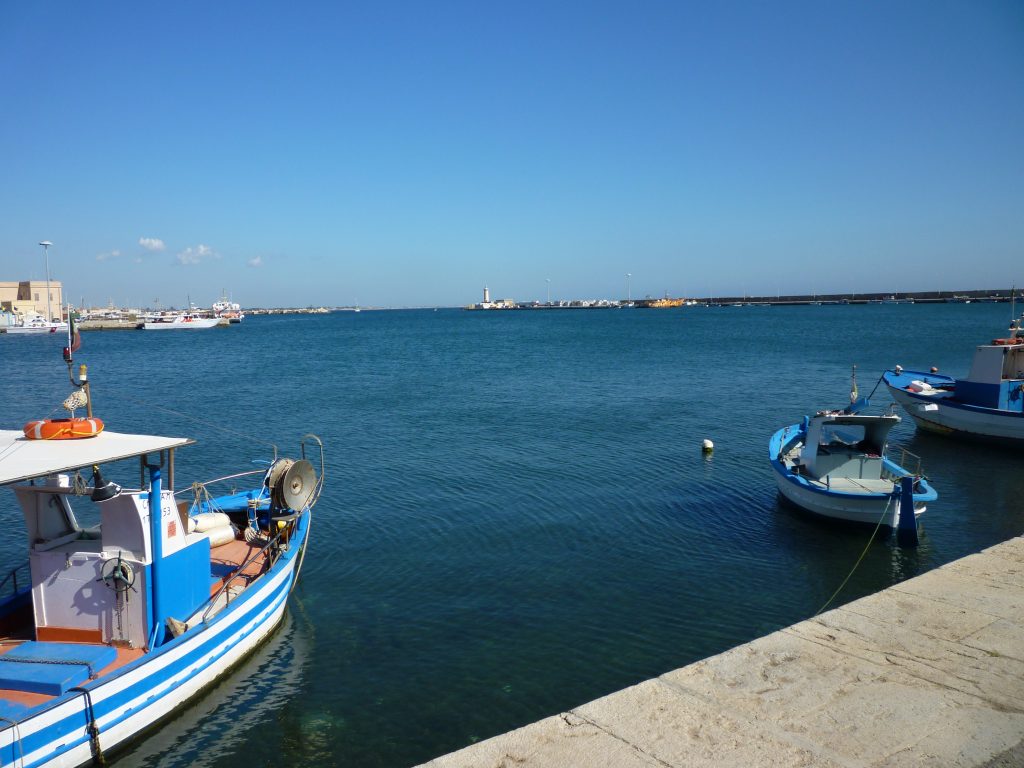
In 1787 Woodhouse was joined in Sicily by his son, also called John, and together they laid the foundations of their business. Their strategy brought a revolution in wine growing to the Marsala region. Small landowners were encouraged to grow the white grape varieties, Grillo, Inzolia and Catarratto, needed to make the Marsala product. Loans were offered for workers to clear the land to plant vines, while a central market for the wine was established. The Woodhouses built roads, supplied transport and constructed the jetty in Marsala’s port to accommodate merchant ships. It was at this jetty that Garibaldi landed his men in 1860.
In Marsala, they built themselves a walled enclosure, known as a baglio, to contain their house as well as storage for the wine. This was necessary as protection from pirates who raided the Sicilian coast from North Africa. Their baglio was a large structure with high walls, built facing the port for easy access to the merchant ships.
In 1798 Rear-Admiral Horatio Nelson brought his fleet into the Mediterranean to protect British interests and, at the Battle of the Nile, defeated the French navy. When later in the year the French, aided by Neapolitan rebels, threatened Naples, the Bourbon king and queen, Ferdinand and Maria Carolina, were brought to Palermo in Nelson’s flagship. The British ambassador to Naples, Sir William Hamilton and his wife, Emma were also on board. It was in Sicily that Nelson and Emma began their love affair.
The Woodhouses met Nelson when the British fleet was recuperating off the Sicilian coast. They introduced him to their Marsala wine and the men became friends. It was a breakthrough for the Woodhouse business, as Nelson followed up by placing an order for his fleet of 200 pipes of their wine. Two years later, an even larger order was made, as Nelson confirmed in a letter to Lord Keith, his commanding officer. These orders, combined with Nelson’s endorsement, meant that the business grew so rapidly that it could hardly keep up with demand.
The Woodhouses were single-minded, choosing to live in western Sicily and showing no interest in Sicilian culture or in expatriate life in Palermo. Together father and son invented Marsala wine for export, first creating the product and then providing the capital and commercial knowhow. Their business model proved so successful that it was copied by the other British merchants who followed them. When Woodhouse, junior, died aged 58 in around 1826, his brothers Will and Sam, who had followed him to Sicily, inherited the business. Neither shared their brother’s ability and both died within ten years. While the Woodhouse brand lived on, renowned for its quality, the entrepreneurial spirit was no longer there.
The initiative passed to a twenty-two-year-old Yorkshireman, Benjamin Ingham, who came to Sicily to make his fortune. This he succeeded in doing by building a business empire around the production and sale of Marsala wine based on the Woodhouse model. When Ingham died in 1861, aged seventy-six, he was the richest man in Sicily and possibly in the whole of Italy.
(For the full story see Sicily, Island of Beauty and Conflict, Chapter 8, Page 57).